From Sawgrass to Seagrass: How Everglades Water Supports Marine Life
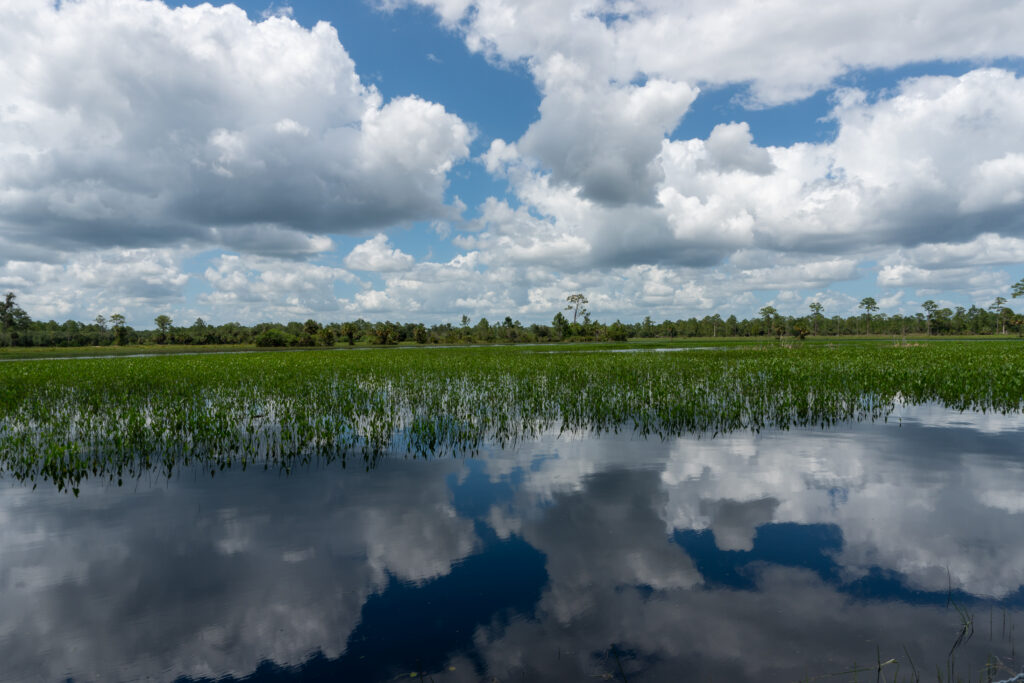
The story of the Everglades continues beyond the sawgrass. Freshwater moving through the wetlands connects with coastal environments, where mangrove roots reach into the water and seagrass meadows spread beneath the surface. These connections help sustain the marine life of Florida Bay—and show why protecting the Everglades matters far beyond the marsh. Where Freshwater Meets the Sea An estuary is a place where freshwater and saltwater mix. Florida Bay, at the southern end of the Everglades, contains shallow basins influenced by freshwater, rainfall, evaporation, and exchanges with surrounding waters. Its conditions vary across the bay and over time. Understanding this changing environment is essential to understanding the plants and animals that depend on it. The Underwater Importance of Seagrass From above, Florida Bay may appear to be an open expanse of water. Beneath the surface, seagrass meadows provide habitat for a wide range of marine organisms. These underwater environments support animals including pink shrimp and spiny lobster. Seagrass and algae also help form the foundation of the bay’s food web. A healthy marine environment depends on more than the animals we can easily see. It also depends on the living habitats that provide food and shelter beneath them. Mangroves Make Room for Life Along the shoreline and around islands, mangrove forests create another important habitat. Their tangled roots provide shelter and nursery areas for fish and marine invertebrates. Above the water, mangrove islands also offer places for birds to nest. This meeting of land and water supports life at different stages, connecting the shoreline with the broader marine ecosystem. Why Freshwater Matters to Saltwater Habitats Marine life needs suitable water conditions, including an appropriate level of salinity—the amount of dissolved salt in the water. When freshwater inflow is insufficient and evaporation concentrates salt, parts of Florida Bay can become excessively salty. Extreme salinity can damage seagrass and affect the habitats that depend on it. Restoring freshwater flow through the Everglades helps support a healthier salinity balance in the bay. Caring for coastal waters therefore requires attention to what happens upstream. Follow the Connection The next time you see a mangrove shoreline or look across Florida Bay, imagine the connections beneath the surface and beyond the horizon. The wetlands, coastal forests, and seagrass meadows belong to a connected story. Learning how they function together gives us a stronger reason to protect them together. The Alligator Ron Bergeron Everglades Museum is being developed to make these relationships easier to explore and understand through conservation education. Stay connected for museum updates and more stories about Everglades water and marine life.